
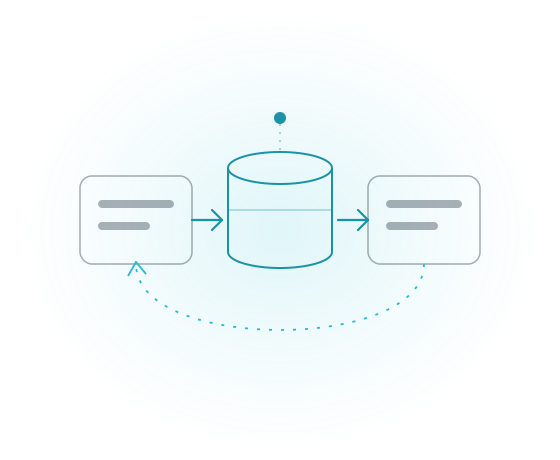

Fewer errors and manual work
For example, sales orders update automatically between CRM and ERP.
Integrations & data
Integration means combining different systems, applications, and data sources to exchange information and work together. It involves less manual work, fewer errors, and up-to-date information to support decision-making.
Benefits
For example, sales orders update automatically between CRM and ERP.
The online store synchronizes product data from PIM and inventory data from WMS.
The BI tool collects data from multiple systems for reporting.
Cloud services and iPaaS platforms enable connecting new systems without major changes to existing ones.
Integrated systems include, for example, ERP, CRM, PIM, e-commerce, HR, WMS, MES, TMS, BI, MDM, CMS, AD, DAM, PLM, POS, CDP, IAM, and iPaaS platforms.
Artificial intelligence expands automation
Traditional integration reliably transfers data from structures. Artificial intelligence extends automation where the input is language, documents, and interpretation: the message is understood, data is extracted and validated, and the rest of the journey follows familiar interfaces.

Hartela
The duration of the data transfer process was shortened by hours.

Sako
MFA integration with production monitoring software.


